Why Servers & Backups Are the Bedrock of Business Continuity
Posted On June 12, 2025, by Megawire Marketing Team
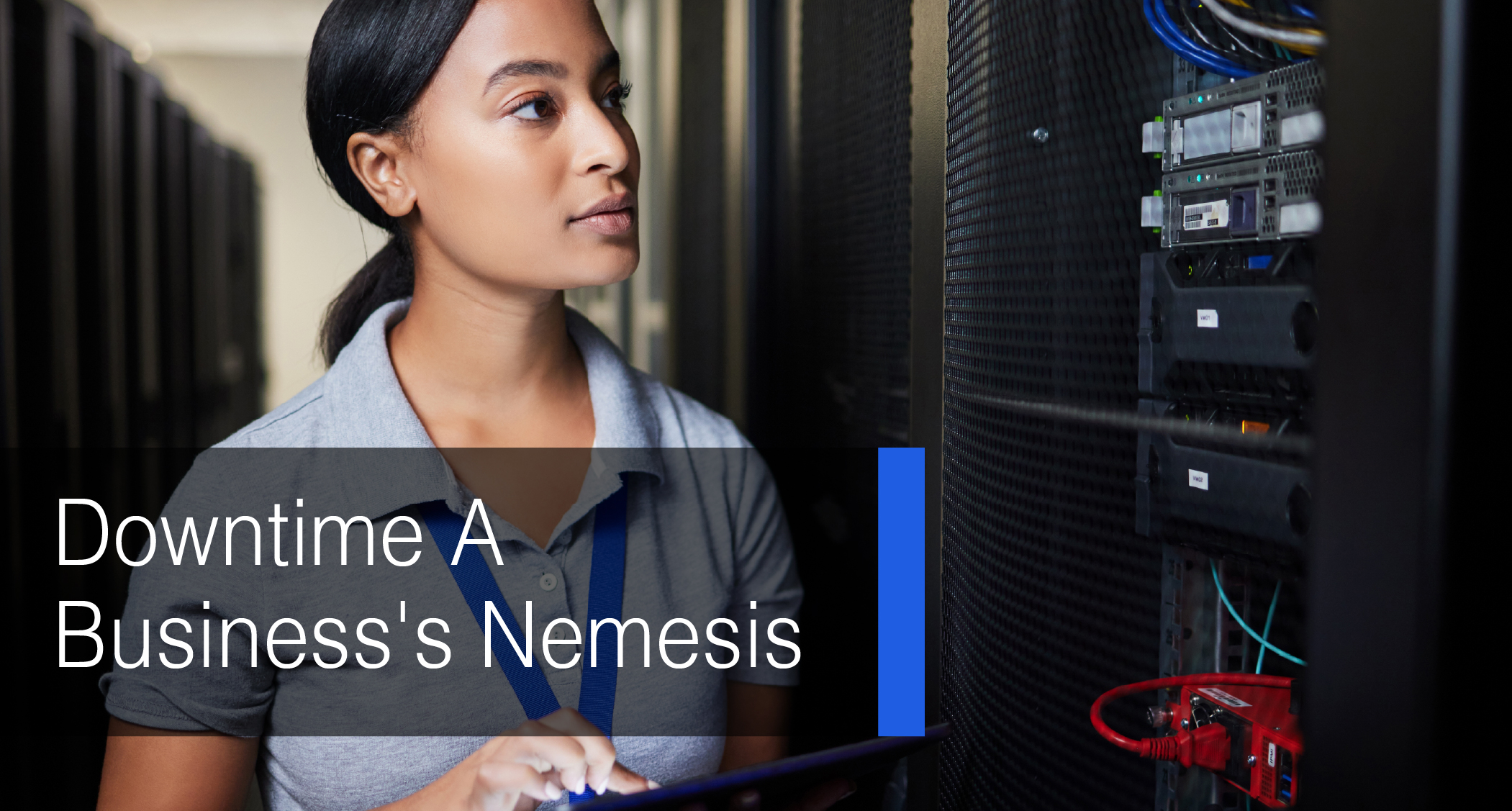
Downtime is a business’s nemesis. One hour offline can cost organizations thousands or even millions of dollars, not to mention the loss of customer trust and operational disruptions. For IT infrastructure managers and data center professionals, ensuring continuous business operations is non-negotiable. At the centre of this unyielding system is a robust setup of servers and backups. These tools are the unsung heroes powering resilience, enabling enterprises to recover and adapt when challenges arise.
This comprehensive guide examines the critical role of servers and backups in business continuity, the principles behind their reliable configuration, and the concrete strategies every IT leader must consider.
The Essentials of Business Continuity
Business continuity refers to the ability of an organization to maintain functional operations or quickly resume them after a disruption. The role of servers and backups in achieving this resilience is twofold:
- Servers ensure ongoing access to applications and data, offering redundancy and scaling capabilities to mitigate downtime.
- Backups safeguard data integrity, allowing easy restoration during cyberattacks, data corruption, or hardware failures.
Together, they form the bedrock of an effective continuity plan, ensuring smooth recovery and operational resilience regardless of the challenge.
Why Servers & Backups Are Non-negotiable
To appreciate their importance, consider what servers and backups bring to the table for IT operations:
- Operational Redundancy: Servers equipped with failover protocols immediately activate secondary systems during outages.
- Data Protection & Recovery: Reliable backups ensure information loss is minimal in the event of disasters or ransomware attacks.
- Compliance & Risk Management: Many industries require data protection protocols to adhere to legal and regulatory standards.
Without these measures, businesses leave themselves vulnerable to prolonged disruptions, reputational damage, and unchecked data loss.
Build Resilience with Onsite and Offsite Backups
Achieving true resilience requires layered data protection tactics that incorporate both onsite and offsite backups. Each has unique strengths and limitations:
Onsite Backups
Pros:
- Faster backup speeds and recovery times.
- Greater control over hardware and data security measures.
Cons:
- Vulnerable to localized threats like fires, floods, or power outages.
Offsite Backups
Pros:
- Geographical separation ensures redundancy, protecting against regional failures.
- Cloud systems scale effortlessly as data grows.
Cons:
- Restoring large data volumes remotely may take additional time.
- Subscriptions and recovery processes can increase overall spend.
The 3-2-1 Rule:
To maximize business continuity, IT leaders widely recommend the 3-2-1 backup rule:
- 3 copies of the data are maintained.
- 2 are stored on separate storage types.
- 1 copy resides offsite (e.g., cloud or remote data centres).
This rule strikes the ideal balance between access, cost, and redundancy.
Redundancy in Server Architecture
When building IT resilience, servers also require redundancy. By distributing business-critical functions across multiple servers, organizations minimize downtime and ensure seamless transitions in the event of equipment failure.
Types of Server Redundancy
- Load Balancing: Multiple servers share requests to evenly distribute workload. If one server goes offline, others seamlessly pick up the slack.
- Failover Clustering: Standby servers mirror active ones, allowing immediate activation if an anomaly is detected.
- Distributed Systems: Applications and data operate across networks, so no single point of failure exists.
For mission-critical systems, many businesses implement N+1 redundancy, meaning one additional component is always available for failover. Enterprises with higher stakes may invest in N+2 setups, offering an additional layer of protection.
The Role of Automation in Backups & Redundancy
Manual backup processes and server configurations are rife with human error risks. Businesses are now integrating automation to eliminate errors and improve efficiency. Key benefits include:
- Scheduled Backups: Automation tools, like Veeam and BackupAssist, execute backups routinely.
- Failover Management: Automated clustering ensures systems switch between active and backup servers with zero delays.
- Real-Time Monitoring: Advanced tools monitor server health, alerting teams to anomalies and preparing automated solutions.
Organizations leveraging automation often gain an edge in reducing downtime, improving operational efficiency, and reducing staff workload.
Case Study Example
Consider a financial services company leveraging both onsite and cloud-based architectures for backups. During a cyberattack targeting their primary servers, the company’s pre-configured failover servers automatically activated. Meanwhile, secondary data centres housing offsite backups restored corrupted datasets within hours.
Result? Uninterrupted service and minimal loss, exemplifying how effective configurations turn worst-case scenarios into manageable roadblocks.
Key Steps to Strengthen Backup and Server Redundancy
For IT managers seeking to fortify business continuity strategies, the following steps can help ensure the reliability of servers and backups:
- Assess Critical Applications: Identify high-priority systems and assign redundancy measures accordingly. Focus on redundancy for core processes essential to operations.
- Select the Right Tools: Evaluate tools designed for enterprise data protection, such as NetBackup for backups or VMware for virtualization.
- Conduct Regular Testing: Quarterly restore test drills validate backup integrity while failover testing confirms proper server transition.
- Invest in Immutable Backups: Locked copies prevent malicious deletions or ransomware corruption, making them a must for modern organizations.
- Implement Encryption Protocols: Encrypt data, particularly in the cloud, for enhanced data security during offsite storage or migration.
Looking Ahead with AI-Powered Solutions
The evolution toward AI-powered predictive solutions in IT infrastructure offers new opportunities for enhanced continuity. These solutions proactively identify server vulnerabilities, predict failures, and recommend optimal redundancy strategies.
For example, platforms integrating AI-enhanced monitoring can continuously evaluate load-balancing tactics, alert teams during abnormal traffic patterns, and recommend scaling measures. AI also optimizes backup frequencies based on usage patterns, improving efficiency without human intervention.
Companies adopting these innovations set themselves apart as resilience leaders, creating a robust operational backbone that thrives under swiftly changing circumstances.
Future-Proof Your Business Today
Investing in robust servers and backups today saves businesses from future headaches caused by failures, disruption, or data breaches. By leveraging best practices, automation, and advanced tools, IT managers can lead their organizations confidently through any crisis.
Are your servers and backups prepared for the unexpected? Partner with reliable solutions to assess and enhance your continuity strategy. Begin your transformation today.
Schedule a call today with one of our team members to discuss your Managed IT services needs with Megawire – For more details, Click Here.
This blog is not meant to provide specific advice or opinions regarding the topic(s) discussed above. Should you have a question about your specific situation, please discuss it with your Megawire IT advisor.
Megawire is a full-service Managed IT services provider. We primarily service all of Ontario and the rest of Canada, the US, and Australia virtually. Our team provides IT infrastructure assessments, network security audits, cloud computing solutions, and IT support for businesses of all sizes and industries.
If you would like to schedule a call to discuss your Managed IT services with one of our team members, please complete the free no-obligation meeting request. – For more details, Click Here.
Connect With Us
- 24/7 monitoring
- 24/7 monitoring and incident response
- AI Integration
- ANSI/BICSI 002
- Artificial Intelligence
- automatic threat isolation
- Category
- clarity of service scope
- cloud infrastructure
- commercial structured cabling
- Compliance and audit support
- Cost Efficiency
- cross-domain expertise
- Customizable and scalable solutions
- cybersecurity
- cybersecurity audits
- cybersecurity mandates
- cybersecurity service
- cybersecurity solutions
- cybersecurity threats
- data center structured cabling
- design and deploy Zero Trust frameworks
- e-commerce
- education
- Efficiency
- Employee awareness training to prevent phishing
- EN 50173
- Endpoint detection and response
- Endpoint Detection and Response (EDR)
- endpoint devices
- endpoint security
- Energy Efficiency
- Enhanced Performance
- Enhanced Productivity
- essential defense mechanism
- Event Management
- evolving cybersecurity regulations
- fast-growing enterprises
- finance
- fully managed cybersecurity services
- Future-Proofing
- High Capacity
- hybrid environments
- hybrid industrial environments
- identifying anomalies
- identity access management
- Ignoring Standards
- Inadequate Labeling
- Incorrect Testing
- internal security policies
- international and regional cybersecurity regulations
- ISO/IEC 11801
- Long-Distance Connectivity
- managed IT services
- managed LAN services
- micro-segmentation
- Multi-factor authentication
- multi-layered security defense
- network access for manufacturing
- New
- next-gen SIEM deployment and management
- optimisation for factories
- OT-IT convergence
- Outsourcing cybersecurity
- Performance
- Performance transparency
- Ransomware
- ransomware attacks
- ransomware defense and recovery services
- real-time data connectivity
- Reduced Downtime
- Reliability
- Scalability
- Security and compliance clauses
- significant cost
- Smart Factories
- Southeast Asia
- Standards Govern Structured Cabling Systems
- strategic value
- Strong client testimonials and case studies
- structured cable installation
- structured cabling installation
- structured cabling installation services
- structured cabling services
- structured cabling specialist
- structured cabling system
- structured data cabling installation
- structured network cabling
- Tag
- TIA/EIA-568
- Transparent pricing and SLAs
- Using Low-Quality Materials
- various sources
- Zero Trust Architecture