Disaster Recovery Solutions That Don’t Disrupt the Bottom Line
Posted On August 14, 2025, by Megawire Marketing Team
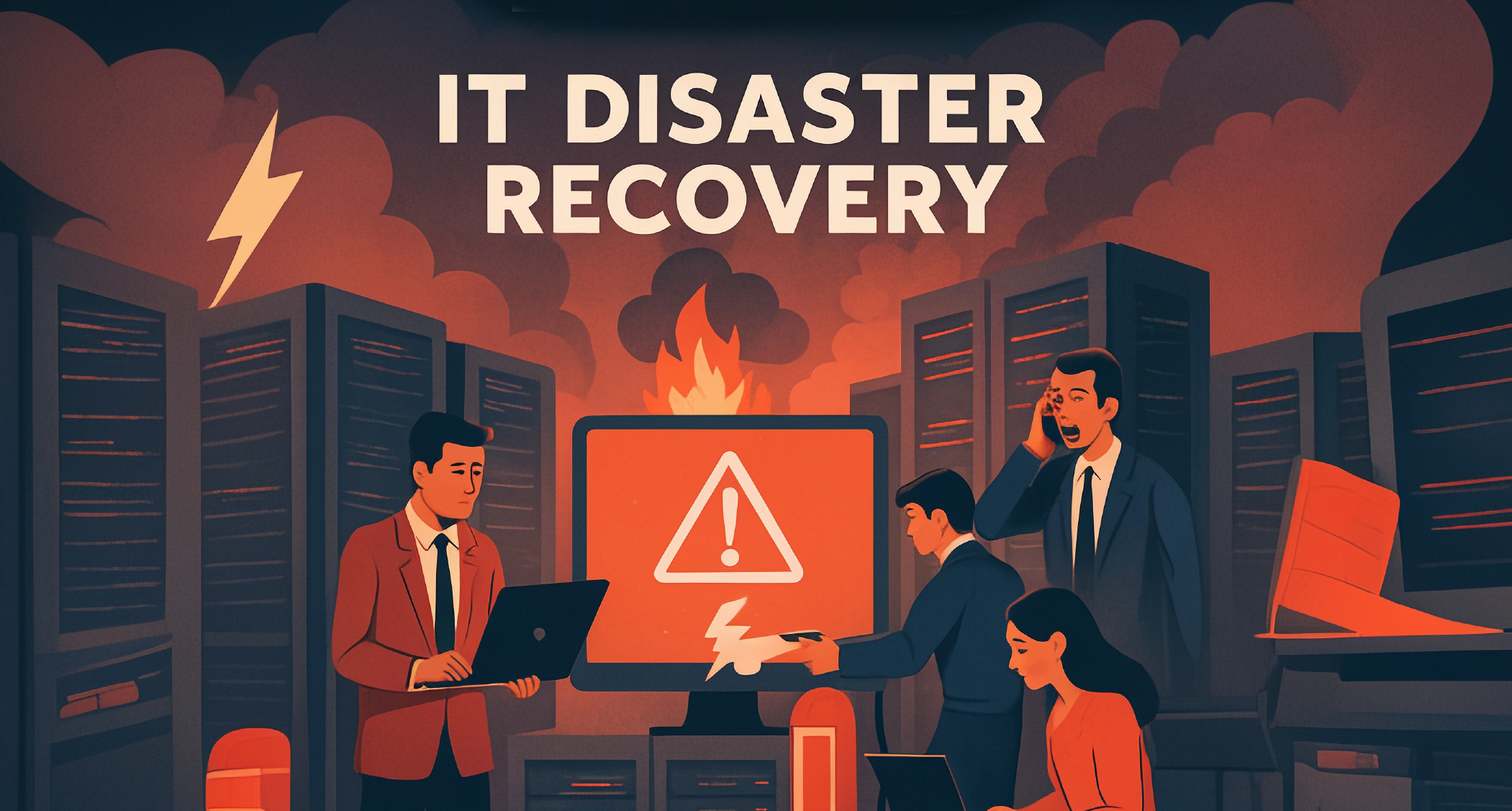
For CIOs and CTOs of mid-sized businesses, disaster recovery planning remains one of the most critical, yet challenging, aspects of IT management. Balancing compliance requirements, cost efficiency, and operational resilience is no small task. Yet, as the frequency of cyberattacks and natural disasters increases, a solid disaster recovery (DR) strategy is non-negotiable.
This guide provides a structured approach to creating a disaster recovery plan that protects your business from disruptions without excessive investment. Learn how mid-sized enterprises can build and optimize a recovery framework that minimizes downtime, safeguards critical data, and reduces costs.
Why Disaster Recovery is Mission Critical
For organizations of any size, disasters can range from data breaches to ransomware attacks, hardware failures, or unforeseen natural events. The impact of such events is significant, ranging from financial losses to reputational damage, and in severe cases, permanent closure.
A 2023 report by IBM found that the average cost of a data breach for middle-market organizations stands at around $4.35 million globally. For mid-sized businesses operating under constrained budgets, such losses can be devastating. Additionally, certain industries, such as finance or healthcare, have strict compliance regulations regarding data protection, making recovery speed even more crucial.
The cost of inaction is high, but this doesn’t mean disaster recovery solutions should break the bank. By implementing scalable strategies, businesses can achieve both operational resiliency and cost efficiency.
Key Areas of Focus in Developing a Disaster Recovery Plan
When approaching disaster recovery planning, CIOs and CTOs must consider three key objectives:
- Minimize Downtime
- Limit Data Loss
- Optimize Recovery Costs
The following steps will enable your organization to build a practical, cost-effective disaster recovery solution tailored to your needs.
1. Prioritize Your Business Continuity with a Risk Assessment
Start with a thorough risk assessment. Understanding potential vulnerabilities will enable you to focus resources on protecting your most critical applications, users, and data. Though risks vary between industries, common threats include:
- Cyberattacks (e.g., ransomware or DDoS)
- Hardware failure
- Natural disasters (floods, earthquakes, etc.)
- Human error
Use a business impact analysis (BIA) to quantify the operational and financial implications of downtime for specific systems. This process will help you define two critical metrics:
- Recovery Time Objective (RTO): The maximum allowable downtime for a system before significant disruption occurs.
- Recovery Point Objective (RPO): The timeframe within which data must be restored without causing unacceptable data loss.
Aligning RTOs and RPOs with each system’s criticality will ensure your recovery strategy is as cost-efficient as it is comprehensive.
2. Map Your Infrastructure and Dependencies
A detailed network infrastructure blueprint is your foundation for effective disaster recovery. Document each system’s roles and dependencies, as well as its recovery priority. Critical systems, such as ERP or secure databases, should fall under the highest-priority category and receive the fastest recovery actions.
Ensure that the blueprint includes:
- Hardware configurations
- Software dependencies
- Cloud integrations
- Networking protocols
This documentation will become valuable during recovery efforts, enabling IT teams to restore operations more efficiently.
3. Select Scalable, Cost-Effective Recovery Solutions
The solution you choose will play a significant role in both achieving recovery objectives and maintaining cost-efficiency. From on-premises to hybrid and cloud-based recovery strategies, here are a few top options to consider based on your budget and resources:
- Backup and Restore:
A foundational DR approach, this involves securely storing data copies on-site or off-site. While cost-effective, the RTO is longer, making it unsuitable for critical applications that require minimal downtime.
- Warm Standby Solutions:
These involve maintaining a scaled-down version of your production environment, either on-site or in the cloud. Warm standby strikes a balance between cost and quick recovery, offering faster RTOs compared to cold backups.
- Cloud-Based Disaster Recovery as a Service (DRaaS):
Cloud-based DR delivers scalability and cost flexibility. Vendors such as AWS, Azure, and Google Cloud allow real-time data replication and failover. You pay for storage and computational capacity as needed, reducing capital expenditures.
- Active-Active Configuration:
The most robust and expensive option, active-active solutions involve maintaining redundant systems that operate continuously alongside primary systems. This eliminates downtime entirely but is typically more suitable for enterprises with high RPO and RTO demands.
4. Automate Backup and Failover Processes
Automation is a must-have in modern disaster recovery solutions. By leveraging technologies such as scripting, orchestration platforms, and AI-driven systems, companies can drastically reduce recovery timelines and operational complexity.
Consider investing in solutions that automate:
- Scheduled backups and data replication
- Failover to secondary environments during system downtime
- Testing and validation of DR plans
Automation doesn’t just improve recovery times; it also reduces reliance on personnel during emergencies.
5. Regularly Test and Update Your Disaster Recovery Plan
The effectiveness of a disaster recovery plan relies on its ongoing optimization. Conduct regular tests to identify any gaps or inefficiencies in your strategy. Key recommendations include:
- Perform mock recovery drills annually
- Validate RTOs and RPOs for mission-critical systems
- Reassess risks periodically to account for new threats
Additionally, make sure your recovery processes, such as role assignments and communication protocols, are frequently updated to reflect current organizational structures.
6. Leverage Regulatory Best Practices
For mid-sized organizations in highly regulated industries, compliance is non-negotiable. Ensure your disaster recovery plan adheres to frameworks like:
- PCI-DSS (Payment Card Industry Data Security Standard) for financial organizations
- HIPAA (Health Insurance Portability and Accountability Act) for healthcare entities
- GDPR (General Data Protection Regulation) for businesses operating in the EU.
By aligning with regulatory standards, your organization avoids hefty fines while simultaneously strengthening customer trust.
7. Enhance Stakeholder Communication
Clear communication can reduce response times and improve coordination during recovery efforts. Your DR plan should include protocols for notifying stakeholders and maintaining transparent updates throughout the recovery process.
- Internal Teams: Provide step-by-step instructions and assign roles for each recovery phase.
- Customers and Partners: Share real-time updates about service availability. Trust is best maintained through honesty and responsiveness.
8. Optimize for Cost-Efficiency
Finding the balance between disaster preparedness and cost control is crucial. To achieve this, invest in DR strategies that align with your operational objectives while offering scalable solutions. Take advantage of vendor pricing models that reduce upfront investments, such as subscription-based DRaaS.
Additionally, calculate the return on investment (ROI) of your disaster recovery plan. By quantifying avoided losses—including downtime-related costs and reputational damage—CIOs and CTOs can demonstrate the value of a robust DR strategy.
Disaster Recovery Strategy in Action
Consider a mid-sized e-commerce retailer that faced a ransomware attack targeting its customer order systems. The CIO implemented a hybrid cloud/warm standby DR solution, with automated backups ensuring an RPO of 30 minutes.
When the attack occurred, automated processes shifted operations to a cloud-based standby system, achieving an RTO of just under two hours. This strategy not only restored services quickly but also protected customer trust and avoided $500,000 in projected downtime losses.
Protect Your Business Without Breaking Your Budget
Disasters are inevitable, but disruptions don’t need to be. With a well-structured and cost-effective disaster recovery strategy, your organization can meet compliance requirements, mitigate risks, and minimize operational downtime.
Whether recovering from a minor hardware failure or a major cyberattack, preparation empowers mid-sized businesses to maintain resilience while protecting their bottom line.
Looking to streamline your IT operations and safeguard your data? Speak with our experts to discover tailored disaster recovery solutions that fit your business.
Schedule a call today with one of our team members to discuss your Managed IT services needs with Megawire – For more details, Click Here.
This blog is not meant to provide specific advice or opinions regarding the topic(s) discussed above. Should you have a question about your specific situation, please discuss it with your Megawire IT advisor.
Megawire is a full-service Managed IT services provider. We primarily service all of Ontario and the rest of Canada, the US, and Australia virtually. Our team provides IT infrastructure assessments, network security audits, cloud computing solutions, and IT support for businesses of all sizes and industries.
If you would like to schedule a call to discuss your Managed IT services with one of our team members, please complete the free no-obligation meeting request. – For more details, Click Here.
Connect With Us
- 24/7 monitoring
- 24/7 monitoring and incident response
- AI Integration
- ANSI/BICSI 002
- Artificial Intelligence
- automatic threat isolation
- Category
- clarity of service scope
- cloud infrastructure
- commercial structured cabling
- Compliance and audit support
- Cost Efficiency
- cross-domain expertise
- Customizable and scalable solutions
- cybersecurity
- cybersecurity audits
- cybersecurity mandates
- cybersecurity service
- cybersecurity solutions
- cybersecurity threats
- data center structured cabling
- design and deploy Zero Trust frameworks
- e-commerce
- education
- Efficiency
- Employee awareness training to prevent phishing
- EN 50173
- Endpoint detection and response
- Endpoint Detection and Response (EDR)
- endpoint devices
- endpoint security
- Energy Efficiency
- Enhanced Performance
- Enhanced Productivity
- essential defense mechanism
- Event Management
- evolving cybersecurity regulations
- fast-growing enterprises
- finance
- fully managed cybersecurity services
- Future-Proofing
- High Capacity
- hybrid environments
- hybrid industrial environments
- identifying anomalies
- identity access management
- Ignoring Standards
- Inadequate Labeling
- Incorrect Testing
- internal security policies
- international and regional cybersecurity regulations
- ISO/IEC 11801
- Long-Distance Connectivity
- managed IT services
- managed LAN services
- micro-segmentation
- Multi-factor authentication
- multi-layered security defense
- network access for manufacturing
- New
- next-gen SIEM deployment and management
- optimisation for factories
- OT-IT convergence
- Outsourcing cybersecurity
- Performance
- Performance transparency
- Ransomware
- ransomware attacks
- ransomware defense and recovery services
- real-time data connectivity
- Reduced Downtime
- Reliability
- Scalability
- Security and compliance clauses
- significant cost
- Smart Factories
- Southeast Asia
- Standards Govern Structured Cabling Systems
- strategic value
- Strong client testimonials and case studies
- structured cable installation
- structured cabling installation
- structured cabling installation services
- structured cabling services
- structured cabling specialist
- structured cabling system
- structured data cabling installation
- structured network cabling
- Tag
- TIA/EIA-568
- Transparent pricing and SLAs
- Using Low-Quality Materials
- various sources
- Zero Trust Architecture